adult protocerebral bridge 1 glomerulus-fan-shaped body-lateral accessory lobe neuron [FBbt_00003635]
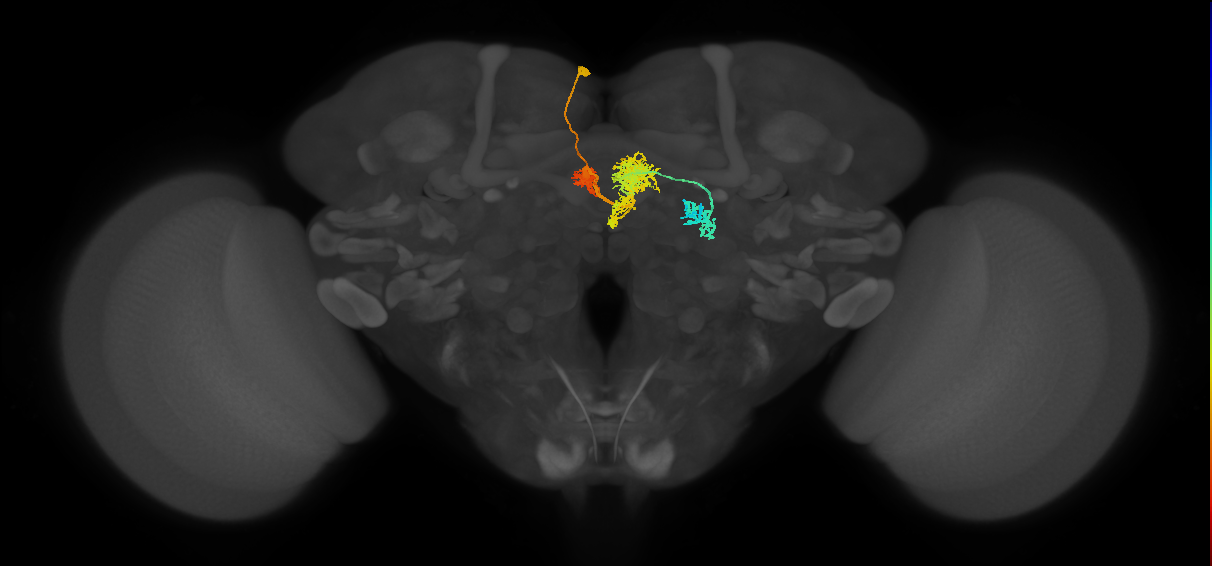
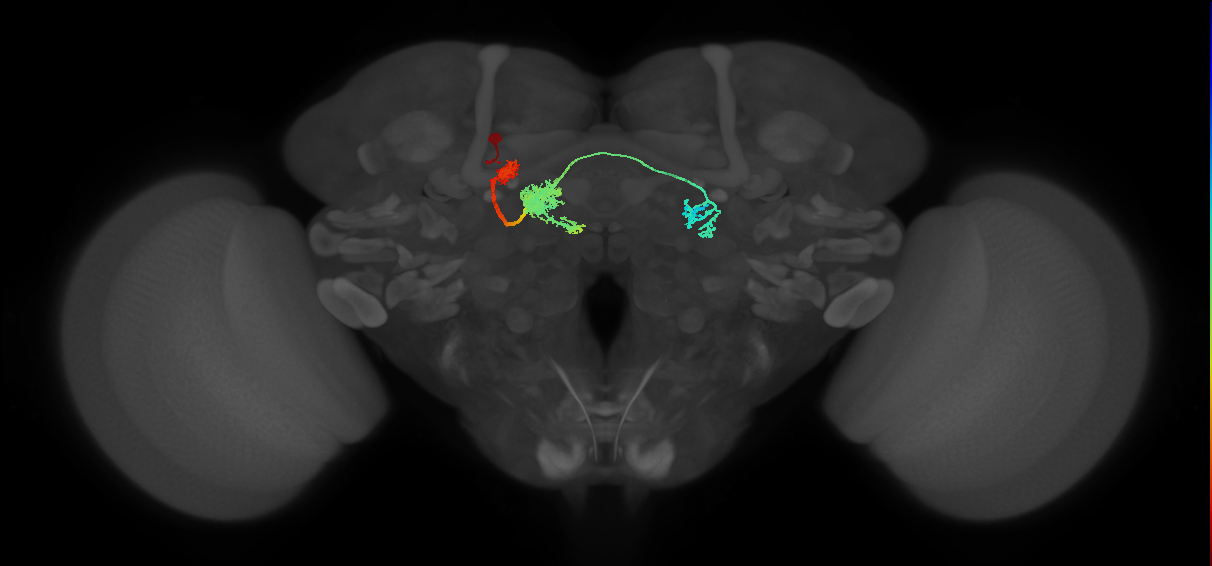
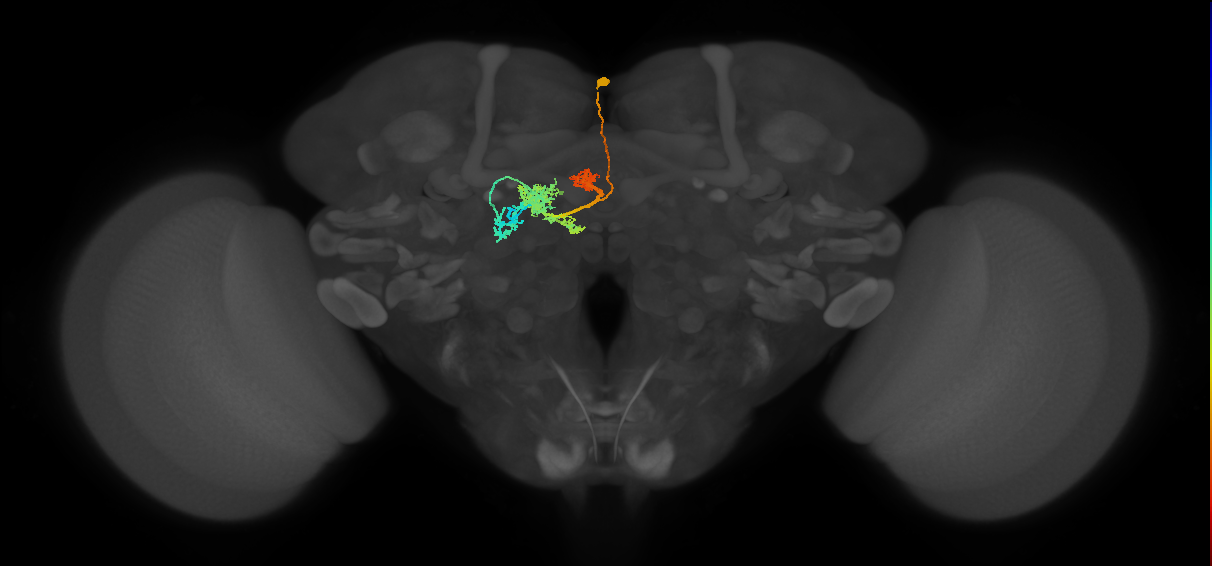
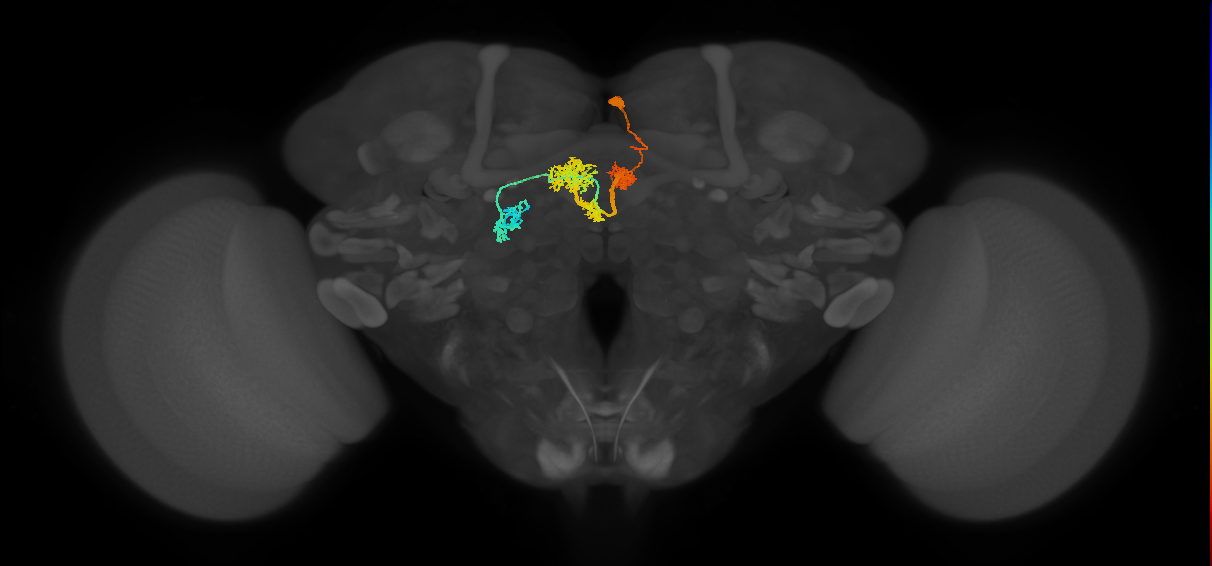
adult protocerebral bridge 1 glomerulus-fan-shaped body-lateral accessory lobe neuron
ID: FBbt_00003635
Adult central complex neuron that connects a glomerulus of the protocerebral bridge (PB) to a column of the fan-shaped body (FB) and then exits the FB laterally to arborize in the lateral accessory lobe (Hanesch et al., 1989; Lin et al., 2013; Wolff et al., 2015; Hulse et al., 2021). Dendritic arborizations are found throughout the targeted PB glomerulus, but in some cases may extend into neighboring glomeruli (Wolff et al., 2015; Hulse et al., 2021). Arbors in the FB are mainly postsynaptic or mixed and arbors outside of the PB and FB are mainly presynaptic for most of these cell types (Hulse et al., 2021). These neurons follow an approximate nine-column organization in the fan-shaped body (Hulse et al., 2021).
The specific 'horizontal fiber system neurons' described by Hanesch et al. (1989) probably correspond to PFR (protocerebral bridge-fan-shaped body-round body) type a neurons (Wolff et al., 2015). Lin et al. (2013) consider HFS to be equivalent to their PFI neurons - any neuron connecting PB, FB and IDFP (lateral accessory lobe/crepine).
Open in VFB 3D Browser →Relationships
- fasciculates with: pb-fb tract
- has soma location: cell body rind of adult protocerebral bridge
- receives synaptic input in region: fan-shaped body
- receives synaptic input throughout: protocerebral bridge glomerulus
- sends synaptic output to region: adult lateral accessory lobe
Alternative Names
| Synonym | Scope | Reference |
|---|---|---|
| HFS | narrow synonym | Hanesch et al., 1989 |
| horizontal fiber system neuron | narrow synonym | Hanesch et al., 1989 |
| PFI neuron | exact synonym | Lin et al., 2013 |
| pb-fb-idfp neuron | exact synonym | Lin et al., 2013 |
| pb-fb-vbo neuron | exact synonym | Hanesch et al., 1989 |
| heavy fibers | broad synonym | Power, 1943 |
Feedback
Was this page helpful?
Glad to hear it! Please tell us how we can improve.
Sorry to hear that. Please tell us how we can improve.